
Following Witkoff and Kushner's trip to Moscow, political experts agree that Russia continuing to drag out time
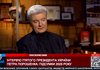
Ukrainian political expert and current military serviceman Taras Berezovets is convinced that Vladimir Putin gained time following the visit to Moscow by US President Donald Trump's envoys, Stephen Witkoff and Jared Kushner.
"As expected. Witkoff and Kushner went to Moscow for caviar and pancakes, and that was it. The dictator's aide, Ushakov, stated that ‘no compromise was reached’ at the meeting with the Americans. But Putin bought himself some time. Incidentally, during the negotiations with the Ukrainian representatives, Witkoff appeared irritated and disinterested, while Putin was dazzled by his sparkling smile," Berezovets noted on Facebook.
Viktor Shlinchak, Chairman of the Board of the Institute of World Politics, believes that "it's important for Putin to hold out until Christmas so he can earn another two months' income while Europe and the USA celebrate the New Year."
"For Ukraine, this is, unfortunately, another New Year without peace. Putin hopes that in two months he'll be handing out the bill not to us, but to Europe ... I sincerely hope that those who need to have seen through this tactic have already 'read through.' And Putin and his entourage will have to answer sooner or later. Better sooner, of course," he wrote on Facebook.
Dmytro Sherenhovsky, Vice-Rector for External Relations and Public Ministry at the Ukrainian Catholic University (UCU), believes that "the Kremlin's current position is not simply due to a lack of willingness to compromise, but rather to attempts to strengthen its demands simply to sit at the negotiating table."
"And this, in turn, creates a kind of 'freezing point,' where Moscow can afford to wait for the West to make the first move. And this is where the question arises: what are the chances that the Kremlin will make any concessions at all, and what needs to change in Western policy for these chances to become tangible? First, about the chances themselves. As of December 2025, they are objectively low," he wrote on Facebook, adding that this probability could increase if the pressure configuration shifts.
"While European unity remains shaky, Moscow understands that time is on its side. Therefore, the first parameter that needs to be changed is to restore the EU's strategic solidarity over the long term, including guarantees of defense support for Kyiv for years to come. The second change is in the very architecture of American policy. The current mission of Witkoff and Kushner is more a demonstration of the White House's desire to appear ‘in search of peace’ than real diplomatic pressure. This optic plays into the Kremlin's hands: it sees the US as seeking a ‘deal’ rather than strategic deterrence, and therefore overstates its demands. The US must finally adopt a logic of negotiations from a position of strength: clear red lines, guarantees of the inviolability of Ukraine's borders, Kyiv's real defensive capabilities, and also firmness on sanctions, including the use of frozen Russian assets," he added.