
Muzychenko: Primary prosthetics remain major challenge, despite significant industry advances
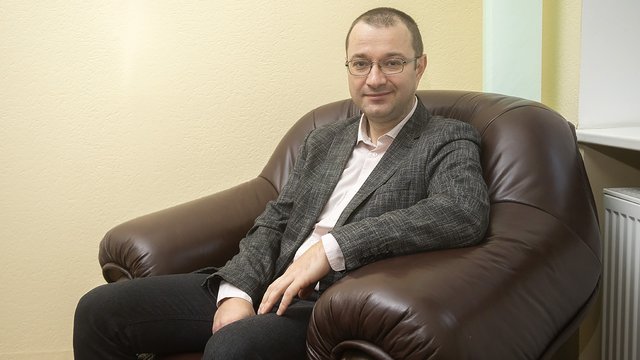
Director General of the Fund for Social Protection of Persons with Disabilities Vitaliy Muzychenko says that in today's conditions a very big challenge is a significant share of primary prosthetics.
"In today's conditions, it is a significant challenge that we have a large share of primary prosthetics. People are not ready to accept their new status and needs. On the other hand, let's be frank: the prosthetics industry was poorly prepared for this. However, in my opinion, the industry as a whole has performed above average over the past two to three years. Considering adaptation and the training of specialists, as well as meeting the needs of a large number of complex cases, this is actually a significant leap," said Muzychenko in an exclusive interview with Interfax-Ukraine.
When asked whether there is a shortage of prosthetists today, the Fund's director said there is, but not in general, only by profile.
"Specifically regarding upper limb amputations at the level of the middle of the forearm, the upper third of the shoulder, or the shoulder joint, there are few prosthetists who are ready and able to work with highly functional prosthetics. This ability comes with experience and working on dozens of cases. We're not talking about months here, but years," he added.
Muzychenko also considers the rehabilitation and post-rehabilitation management of prosthetic patients important.
"Another challenge that I would like to emphasize is that— in our country, the assessment of needs and the selection of rehabilitation aids are carried out in an office-based manner. In other words, a person ends up before a commission that loses touch with the person's living environment. In theory, an interdisciplinary or expert team assessing a person's functional capabilities can select the best wheelchair for them based on their physical condition. However, when a person returns to a rural area with no asphalt and is assigned a road wheelchair with functionality that allows them to move quickly on high-quality surfaces, the connection is lost. Or, if a person is assigned a heavy wheelchair and lives on the fourth floor without an elevator, this connection is lost," said the head of the Fund.
He emphasized that it is necessary to separate what is directly related to the human body, what is determined by its functional needs, and what is determined in relation to its place of residence.
"And this can only be done with a visit to the place of residence, with an assessment, with measurements. And this is no longer a medical history," Muzychenko stated.